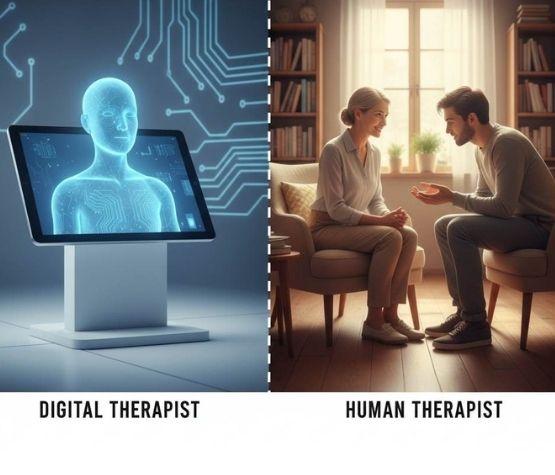
Why the Digital Therapist Cannot Replace the Human One
Artificial Intelligence has stepped into the mental health space faster than any of us expected. With chatbots available every hour of the day and apps promising personalised emotional support, it is easy to believe that AI can take over a role that once belonged entirely to humans. But beneath the convenience and the polished responses, something more concerning is happening. AI therapy, despite its good intentions, is quietly affecting people in ways that are not always positive.
The Illusion of Being Understood
One of the biggest issues with AI therapy is that it creates a sense of being understood without any real understanding. A chatbot can mirror empathy, but it does not feel anything. It can recognise patterns in language, but it cannot sense the depth, tone or emotional weight behind what someone is saying. People walk away feeling momentarily soothed, but that comfort comes from an illusion, not genuine connection. Over time, this false sense of being understood can make a person feel even more isolated because the emotional bond they think they are forming simply does not exist.
When “Support” Replaces Human Connection
Therapy has always been more than guidance. At its core, it is a relationship — a safe space where someone is emotionally present, listening not just to words but to pauses, hesitations and unspoken feelings. When people turn to AI instead of human therapists, they slowly remove themselves from this kind of relational healing. They begin to value convenience over connection. It becomes easier to talk to a machine that won’t question them, interrupt them or ask uncomfortable questions. But this comfort comes at a cost. The very act of avoiding real vulnerability with another person prevents emotional growth. What feels safe becomes a form of emotional avoidance.
The Subtle Promotion of Emotional Avoidance
Real therapists know when someone is avoiding a deeper truth. They notice patterns, challenge harmful beliefs and gently guide clients into uncomfortable but transformative spaces. AI does not do this. It cannot differentiate between someone who genuinely needs comfort and someone who is escaping from facing a difficult emotion. Instead, it responds with gentle reassurance every time, unintentionally strengthening avoidance patterns. Users may feel calm for a moment, but they are not learning how to regulate, process or confront what hurts. They are simply numbing themselves through conversation.
No Accountability, No Long-Term Growth
Human therapy is built on continuity. A therapist remembers your story, notices your progress, and helps you recognise when you are repeating the same cycles. They hold you accountable, not in a harsh way, but in a way that supports growth. AI therapy lacks this continuity. Each interaction is isolated. It can’t truly track long-term patterns, challenge cognitive distortions or help reshape behaviour. Relief may come instantly, but transformation rarely does. Many people start relying on AI for emotional relief instead of building the resilience and insight that real therapy encourages.
The Uncomfortable Reality of Data and Privacy
Another aspect people often overlook is the enormous amount of emotional data shared with these systems. Every fear, insecurity and private feeling becomes part of a dataset. Even when companies claim safety, the truth is that no digital system is fully secure. In some cases, emotional insights are used for targeted advertising or behavioural profiling. Traditional therapy is built on confidentiality; AI therapy, however accessible, cannot fully offer that guarantee. For something as sensitive as emotional wellbeing, this is a risk with long-term consequences.
A Quiet Reinforcement of Loneliness
Many people today already struggle with loneliness and social disconnection. Replacing human therapy with AI reinforces this divide even further. If someone finds comfort only in talking to a machine, their capacity to build real relationships may weaken over time. Conversations become transactional. Vulnerability becomes rare. The emotional muscles required to form intimacy and trust are no longer exercised. What begins as a convenient tool slowly becomes a barrier between individuals and the human connection they actually need.
Finding a Healthy Balance
AI can be a helpful supplement. It can guide a breathing exercise, suggest grounding techniques or help someone navigate a moment of distress. But it cannot replace the essence of therapy: a real human presence. Healing has always been relational. Growth happens through being seen, not scanned; through being heard, not processed; through being understood, not predicted. AI can assist the journey, but it cannot lead it.
As mental health becomes increasingly digital, the real risk is not that AI exists, but that we start believing it can do what only humans can. A machine can reply, but it cannot relate. And in the world of emotions, that difference is everything.