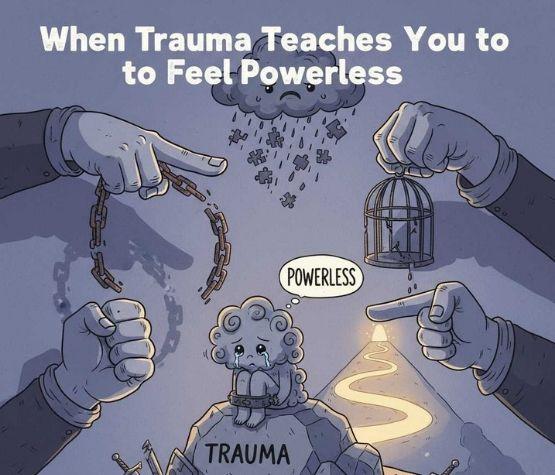
When Trauma Teaches You to Feel Powerless
There’s a quiet shift that happens inside people who’ve gone through too much for too long. It’s not always visible, but it shows in how they talk, how they make choices, and how they view the world.
It’s what psychologists often call a victim mindset, but behind that phrase is a story of deep survival.
The Birth of Helplessness
When a person faces trauma like repeated loss, betrayal, emotional neglect, or abuse, their mind learns one thing: control is dangerous, hope is painful.
Each time they try to stand up and get knocked down again, the brain starts to protect them in a strange way.
It whispers: “Don’t try too hard. Don’t expect too much. It hurts less that way.”
Over time, that protective voice becomes louder than anything else.
They stop expecting good things.
They stop believing effort makes a difference.
They live waiting for the next blow — even when life around them has changed.
The Comfort of Predictability
The victim mindset doesn’t mean someone wants to suffer. It means suffering has become familiar.
When you’ve spent years in chaos or pain, hope starts to feel dangerous. Trust feels risky.
So, the mind clings to predictability: If I always expect the worst, I can’t be disappointed.
It’s a strange kind of safety — the safety of knowing what to expect, even if it’s painful.
Seeing Through the Trauma Lens
People with unresolved trauma often interpret even neutral situations through a trauma lens.
A friend cancels a plan and it feels like rejection.
A new opportunity appears and it feels like a trap.
The brain, wired for survival, keeps scanning for danger, even when none is present.
That’s why telling someone to “just be positive” or “move on” never works.
They’re not choosing to see the world this way — their nervous system is still protecting them from threats that no longer exist.
Reclaiming Power
Healing doesn’t happen overnight.
It begins when the person realizes: “I’m not broken — I’m surviving in the only way I knew how.”
That shift alone changes everything.
Through therapy, reflection, and gentle self-compassion, they begin to test the waters of trust again.
They start taking small steps — setting boundaries, asking for help, making choices that remind them they do have power.
With time, the narrative changes from
“Why is this happening to me?”
to
“What can I do differently now?”
It’s not about erasing the past, but it’s about reclaiming authorship of the present.
The Journey Forward
A victim mindset is never born from weakness.
It’s born from survival, from doing whatever it took to keep going in the middle of pain.
But healing asks for something different — to step out of that protective shell and slowly believe:
“I am no longer living in the past. I am safe now.”
That realization doesn’t erase the trauma, but it does start to loosen its grip — and in that moment, freedom quietly begins.